So, you’ve decided you’re ready to make the switch to sustainable period products. Welcome! We’re delighted you’re taking the time to make an informed decision about something that is being inserted into your body.
With so many menstrual care options on the market today, the decision-making process can be admittedly daunting. But, we’ll walk you through the difference between a menstrual disc vs cup.
There are a few key differences between the two – it’s a matter of shape & size differentiation, and they involve different insertion techniques. But, why make the switch? What’s the payoff? We’ve given this point our undivided attention in the rest of this article.
Today, there’s more than one way to get around using pads and tampons – meet menstrual discs and cups!
But let us break it to you: we have some bad and some good news. These products require a learning curve. That goes for both menstrual cups and discs. Finding the product that’s best for you will include some trial and error.
But the good news is once you find an alternative menstrual product that fits you, you’ll be walking on air.
This article will hopefully solve your menstrual cup/menstrual disc dilemma and dive deeper into the technicalities of what should be your personal fighter. This article puts the nixit menstrual disc side by side with a cup, so you can see which one solves your specific situation.
Your Menstrual Disc vs Cup Comparison Chart
If you’re tired of changing your tampons and pads every 4 to 8 hours, menstrual cups and discs are great alternative menstrual products to turn to. They’re both inserted into the vagina and designed to collect menstrual fluid rather than absorb it.
Additionally, both of these options offer up to 12 hours of protection and have higher capacity than pads and tampons (meaning they’re a lifesaver for those with heavy flow). They’re a good option for people who pursue an active lifestyle.
But which one will work best for you? We’ve created a chart to help you decide between the two. We’ve divided the features into a few categories (such as shape, suction, and capacity).
Menstrual Cups vs Discs Comparison Chart | ||
Menstrual Cup | Menstrual Disc | |
Shape | Cone-shaped | Disc-shaped |
Vaginal canal | Vaginal fornix | |
Capacity | 10-30 ml | 70 ml |
Size | Depends on the brand | One-size-fits-all |
Suction | Yes | No |
Period sex | No | Yes |
Heavy flows | Yes | Yes |
Mess-free removal | Yes | No |
Auto-empty | No | Yes |
Menstrual Cups and Menstrual Discs—What’s in it for Me?
Shape & Comfort
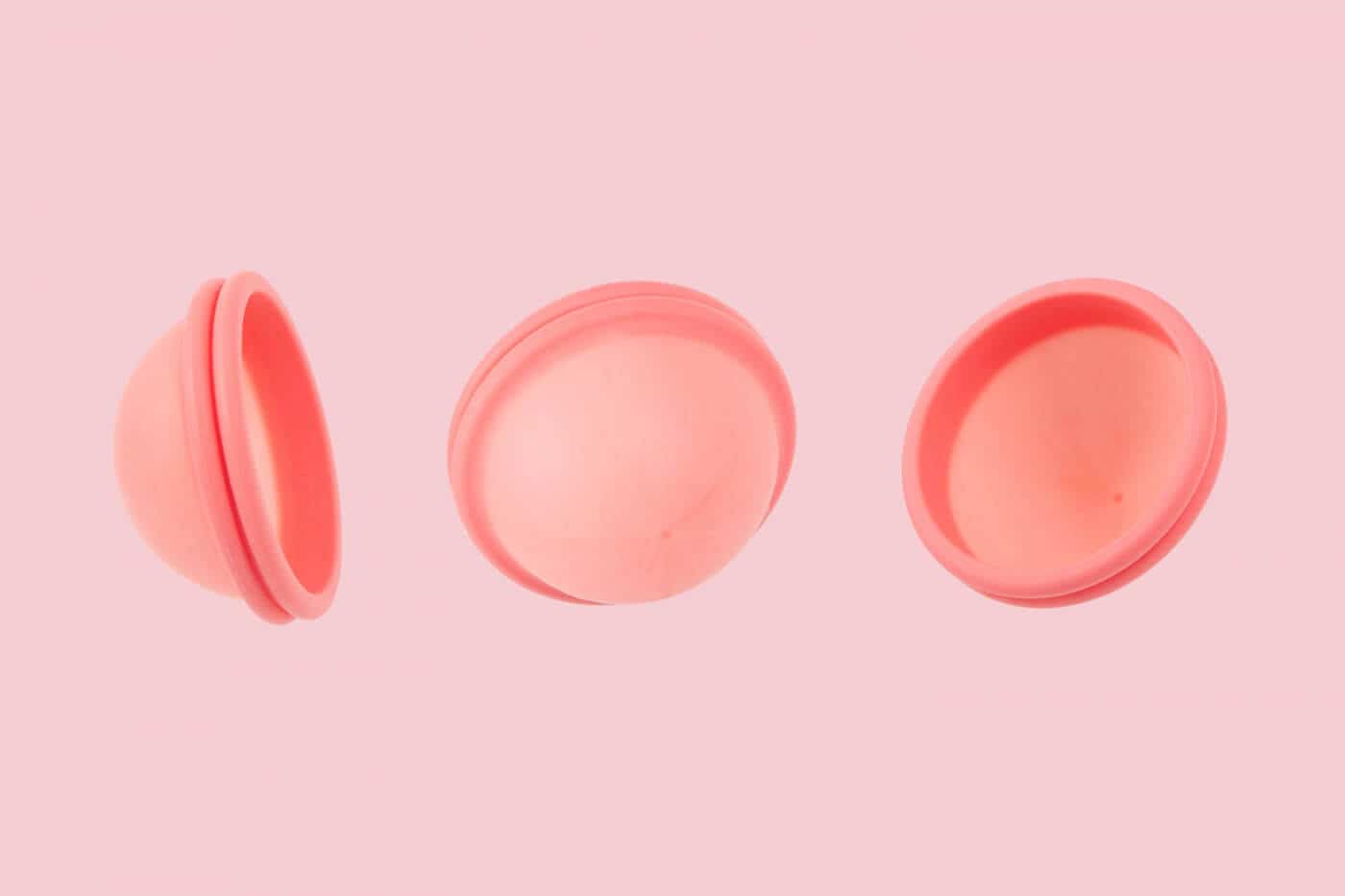
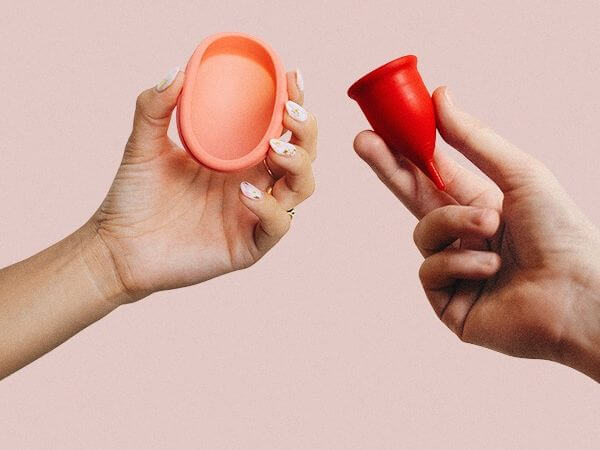
Menstrual cups are bell or cone-shaped while discs are, well, disc-shaped. Cups have a stem to assist with removal and are more rigid than discs, which have a wider and shallower body.
Menstrual discs do appear larger out of the box but don’t judge by the looks of it. Cups are smaller but that’s because they sit in the narrower portion of the vagina.
A good menstrual cup or a disc should above all provide you with comfort. That said, cups can be slightly less comfortable than discs, as they sit in the vaginal canal, which is brimming with nerve endings.
Placement
A menstrual cup is placed inside the vaginal canal and uses suction to stay in place. It should sit directly below the cervix to be able to collect period blood securely.
Conversely, a menstrual disc rests in the vaginal fornix behind the cervix, an area further up than the vaginal canal.
Insertion
Menstrual cups and discs are inserted differently. To compare the process, we’ve parsed it into three different phases - when the period product is folded, when it’s inserted, and when it's sealed into place.
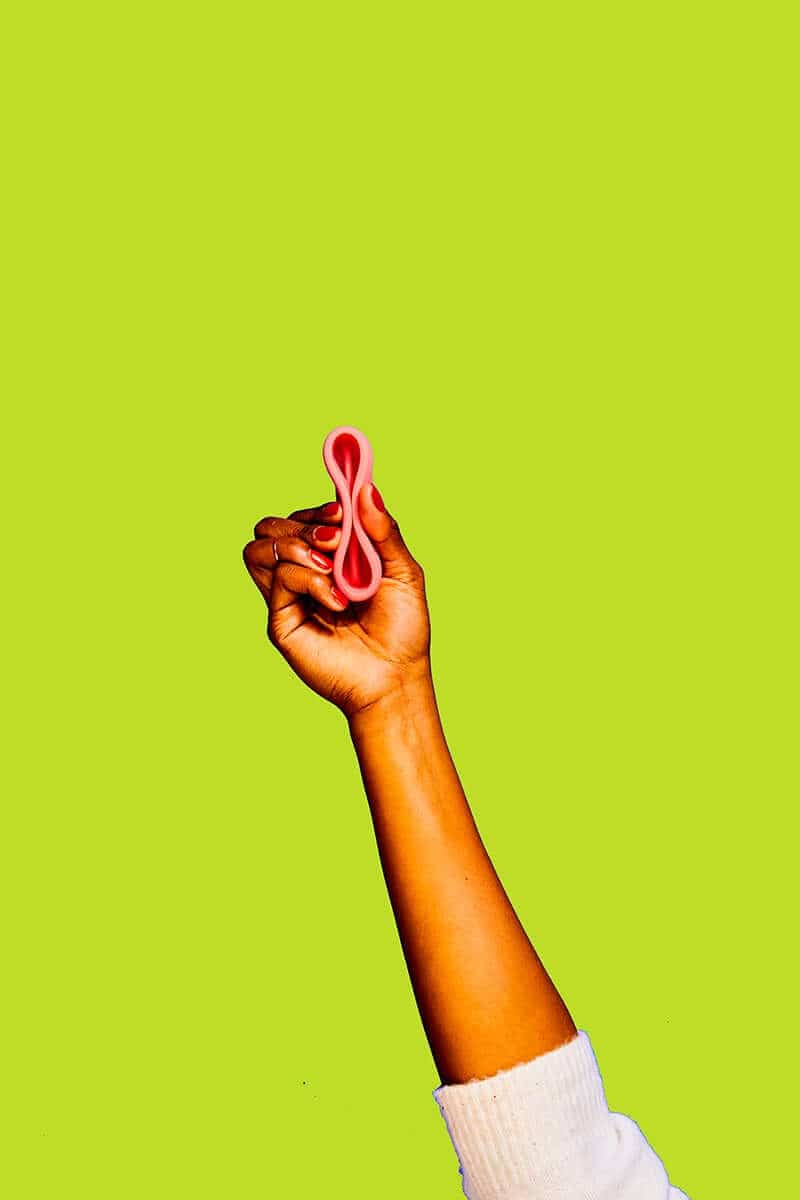
Fold – There are three techniques you can use to insert a menstrual cup: a c-fold, a 7-fold, and a punch-down fold. A menstrual disc has only one fold: squeeze it between your thumb and forefinger to fold it in half for insertion. That said, a disc can be less stressful to use because you don't have to figure out which fold will help it open properly upon insertion.
Insert – To insert a cup, hold the fold firmly and insert it through the vaginal opening, angling it towards your tailbone so it sits below your cervix.
Inserting a folded menstrual disc is similar. It should be aimed towards your tailbone but should be placed differently. To insert it properly, make sure one end of the rim reaches the vaginal fornix, then tuck it behind your pubic bone to help keep it in place.
Seal – While a menstrual cup uses suction to create a seal against the vaginal walls, a menstrual disc doesn't. This helps a bit upon removal, as breaking the suction seal can be tricky.
If you use an IUD, this is worth knowing: a systematic review found a possible association between menstrual cup use and an increased risk of IUD expulsion, though the evidence is limited and the studies disagree. The review looked only at cups, not discs, so check with your provider before switching.
Removal
Discs don't have a suction seal, so removal can be easier. That said, removing a menstrual cup is less messy because cups have a stem, letting you carefully pull it down the vaginal canal.
Discs, on the other hand, are removed by hooking the disc rim, which risks it partially collapsing and spilling some of the disc contents onto your fingers. Therefore, some people find menstrual discs a less desirable option if they’re squeamish at the sight of menstrual blood.
Possible solution: The messy removal inconvenience can be compensated by a disc’s so-called auto-dumping feature. It means the disc can self-empty while using the bathroom (and you can control this)! To do it, bear down while sitting on the toilet. This will make the disc tilt and let some menstrual blood escape, making the removal less messy (and also less frequent during the heavier days).
Sizing
Sizing is much more critical when choosing a cup than a disc, and this is purely down to human anatomy.
- If a menstrual cup is too small, it may not create a leak-proof seal with your vaginal walls, which can lead to leakage. If too large, it can feel uncomfortable. And with many different sizes on the market, choosing the right one can get confusing.
- The vaginal fornix is not as narrow as the vaginal canal. It’s a tented area that’s pretty much the same size regardless of body size. For this reason, most menstrual discs are about the same design and size. This stops the sizing from being an issue altogether.
Leaks or No Leaks?
You shouldn’t be experiencing leaks with either cups or discs unless they’re out of place.
If you’re worried your menstrual product may leak, make sure it fits snugly against your vaginal walls. If you’re a first-time user, you can use a dash of a water-based lubricant to shift your disc or cup around until you find a no-leak position. Stick to water-based. Oil-based and silicone-based lubricants can damage the silicone your disc or cup is made from.
Leaks can also happen if your period product is full, so emptying it religiously helps prevent leaks.
Sex or No Sex?
Having penetrative sex is not recommended while wearing a menstrual cup. Inversely, a disc allows for mess-free sex as there’s nothing there to block the vaginal canal.
Reusable vs Disposable
Swapping traditional period products with reusable products is a good idea for those who are tired of having to deal with their menstrual flow so much. It’s those moments when you get through your tampons at such a rate that they run out at the least convenient of times.
And it’s not only a matter of convenience. Reusable period products can save you money and they go easy on the environment. But how do our cups and discs fare in this department?
- Most menstrual cups are reusable, and they can last you anywhere from 1 to 10 years, depending on the manufacturer.
- There are disposable discs as well. While these products have traditionally been made from plastic and used as single-use products, nowadays, more and more reusable menstrual discs are emerging.
How to Choose the Right Product
A good menstrual cup or disc should come with all the above-mentioned benefits. Most critically, it should give you reliable, worry-free protection even on the heaviest days. nixit is a disc-shaped reusable menstrual cup that comes with the nifty features listed below.
Convenience. nixit offers safe 12-hour long protection.
Money-saving. This reusable disc will last you up to 5 years (think of how many tampons worth of savings this is)
Simple selection. This one-size-fits-all reusable menstrual disc makes sizing a no-brainer.
Ease of use. nixit disc is suction-free, meaning you don’t have to tug it when pulling it out.
Safe from leaks. The high-capacity disc can hold 70 ml of menstrual fluid, and that’s a lot! This means heavy flow days don’t have to keep you on the edge anymore.
Period sex. You can practice mess-free period sex while wearing the product.
Safe. It’s made of body-safe materials (100% medical-grade silicone) and it’s FDA registered to boot.
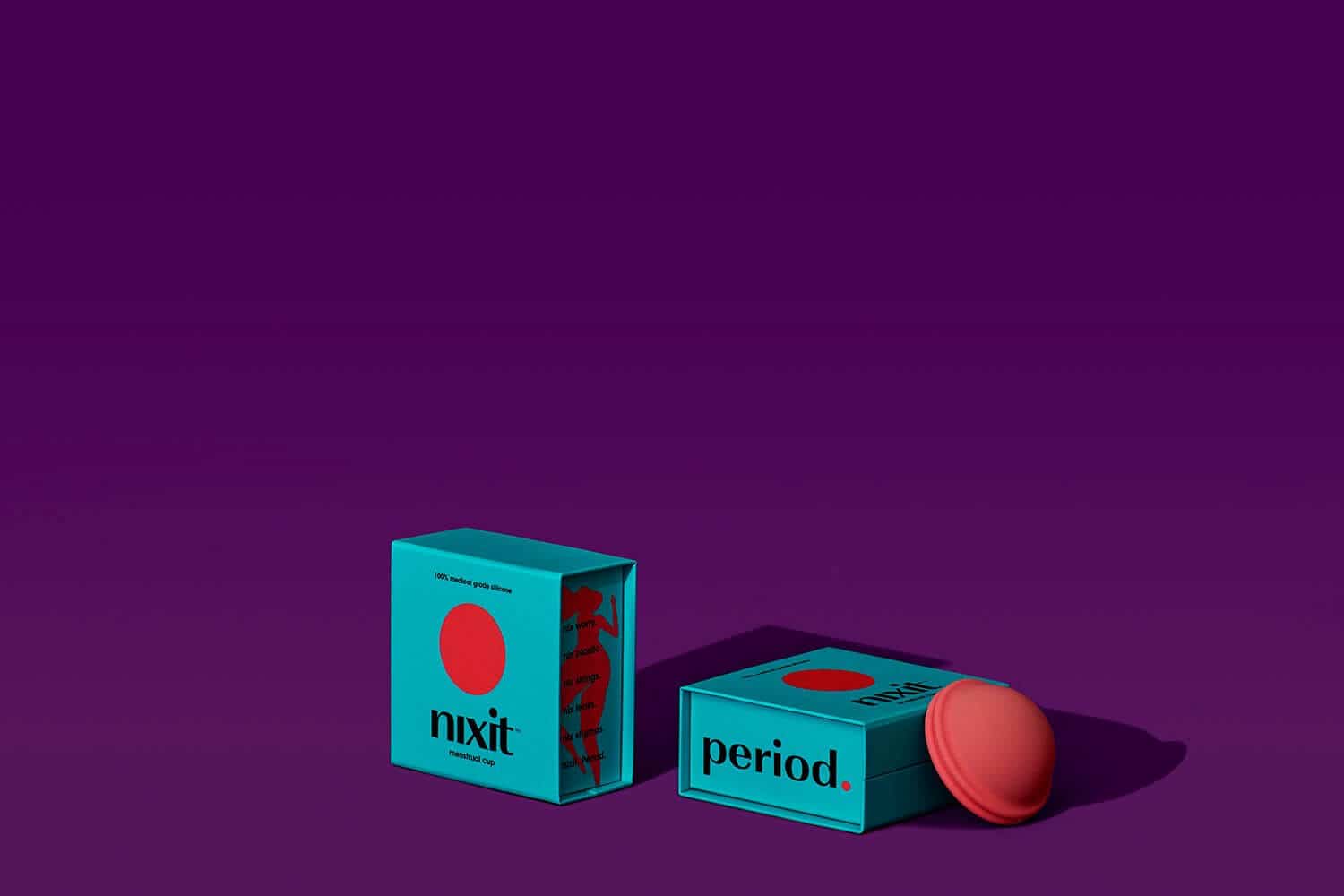
“Switching to the nixit disc changed the game for me with pretty much all the issues I had with other cups. The silicone is so soft that it doesn't interfere with my bathroom use, and it doesn't worsen my cramps when bloating is particularly heavy. The disc shape doesn't shift as I move through the day, so I can easily wear it for the full twelve hours before taking it out to clean.” - Reddit review
So, Which One Will It Be? Menstrual Cups vs Discs—The Final Verdict
Both menstrual discs and cups can give you great zero-waste period protection. But it’s most important how they fare in your book and which one is more likely to solve your menstrual problems.
A menstrual cup might work better for beginners, as the stem might give them more confidence with product removal. Either way, expect 1–3 cycles to pass until you get the hang of it.
A disc can be a better option for you if you have sizing issues or need extra-safe protection (the auto-dumping feature here is a plus). Preferring comfort and period sex is also a deciding factor here.
Ready to start your personal period revolution? We make it our mission here at nixit to help keep you in the know. That said, visit our central knowledge hub and make sure to check out our Comprehensive Menstrual Disc A to Z Beginner Guide.
Or take another route on your alternative period protection journey, learning from various knowledge sources available here at nixit: